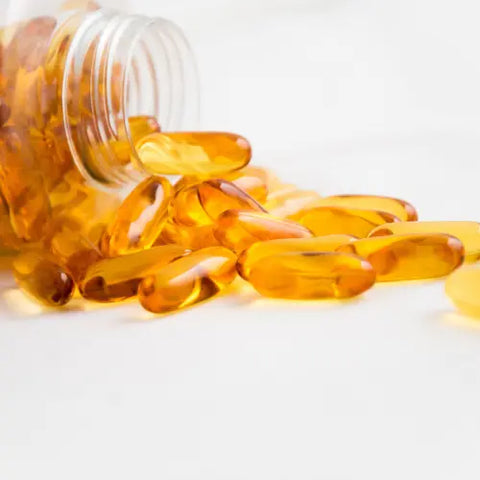











To help keep mothers and babies healthy, nutritional guidelines for pregnant women and those planning a pregnancy include a daily postpartum food supplement. But what about after the birth? Although there are no specific recommendations on food supplements for postpartum mothers, and very few studies have been carried out on the subject, many prenatal vitamins and other nutrients remain essential after giving birth. As in pregnancy, a healthy diet may not be enough to cover all the nutritional needs of breastfeeding mothers and of all mothers recovering while caring for a newborn.
For fish-free DHA, discover our Vegan Omega-3 DHA + EPA, extracted from microalgae.
For high iron needs, our Organic Spirulina Iron provides 93% of the NRV for iron.

We hear a lot about the importance of prenatal vitamins before and during pregnancy, but what about after giving birth? Should women take vitamins or supplements after the birth? Here are 5 things to know about taking vitamins after your baby is born. Most healthcare providers recommend taking prenatal or postnatal vitamins after the birth. Talk to your doctor before your due date to find out which vitamins, if any, you should take after giving birth. Although there is no general recommendation on when to stop taking a prenatal vitamin, many providers suggest continuing for at least part of the postnatal period. Vitamins marketed as “prenatal” and “postnatal” generally have very similar compositions. However, some postnatal vitamins contain varying levels of nutrients aimed specifically at the body of the person who has given birth. For example, some postnatal vitamins contain extra iron to support recovery after the birth, vitamin D to help the body absorb calcium, and additional B vitamins to make sure breastfeeding mothers and their babies get enough. On that subject...
Read: The benefits of food supplements
A postpartum food supplement is especially important when breastfeeding

A balanced diet is probably not enough to guarantee breastfeeding mothers the essential nutrients needed for their own optimal health and that of their baby. The World Health Organization recommends that breastfeeding women keep taking a prenatal or postnatal vitamin for as long as they breastfeed. One study indicates that continuing to take a prenatal or postnatal vitamin containing folate, DHA, vitamin D and iodine may support the baby's brain development, processing skills and visual acuity. An adequate intake of vitamin D and DHA matters not only for mothers but for their little ones too! Breast milk alone does not provide babies with enough vitamin D. That is why the American Academy of Pediatrics recommends supplementing breastfed babies with 400 IU of vitamin D a day until they start eating solid food.
Read: Fighting oxidative stress
The CDC recommends that breastfeeding women on a restrictive diet (vegetarian or vegan, for example) take a prenatal or postnatal vitamin for as long as they breastfeed. A lack of animal protein in the diet can lead to B12 deficiency, which can cause symptoms in babies such as loss of appetite, lethargy, slow motor development and blood problems.
Postpartum food supplements: iron matters
Another reason to keep taking a prenatal vitamin after giving birth? The extra iron. Because of the natural blood loss that comes with childbirth, it is particularly important to replenish your iron stores during the fourth trimester. All mothers may benefit from continuing a prenatal or postnatal vitamin for three months after the birth to make sure their iron levels are stable, especially those with a history of anaemia. After that, if you are not breastfeeding, ask your doctor whether you should carry on taking a prenatal or postnatal vitamin.
Read: Which food supplement for weight gain?
Postpartum food supplements: focus on nutrition too
Even if you are taking vitamins after your baby arrives, it is important to try to eat well too. Your body has been through a lot, so it is crucial to give it the nutrients it needs to heal and to support your new (and tiring) life as a mum. Looking after yourself and eating well can help you feel your best, physically and mentally, while you care for your little one. Neglecting your own health can leave you feeling (even more) exhausted, weak and mentally drained – and as the saying goes, “you can't pour from an empty cup!”
We know the postnatal period can be a bit of a blur, and fitting in meals while looking after a baby can be difficult, but do what you can to focus on a balanced diet whenever possible. Try to pay particular attention to the following to make sure you get what you need after giving birth:
- Protein from foods such as lean meat, pulses and fish.
- Fibre from fruit and vegetables
- Iron from foods such as pulses, red meat and green leafy vegetables.
- Calcium from foods such as dairy products, green leafy vegetables and pulses.
- Folate from foods such as pulses, leafy vegetables and citrus fruits.
- Omega-3 fatty acids from a range of foods such as oily fish, seeds and nuts.
- Talk to your doctor about postpartum vitamins and food supplements.
Discover Algorigin food supplements: Organic Spirulina, Klamath, Astaxanthin ...
Before you start taking any new vitamins or supplements (many of which are regulated by the FDA as foods rather than as medicines), it is important to talk to your doctor. Depending on your medical history, your lifestyle and how you plan to feed your baby, your healthcare provider may have specific recommendations on what to look for in a vitamin or supplement after the birth. There are many food supplements aimed specifically at new mothers, particularly those who are breastfeeding and trying to increase their milk supply. Herbs such as fenugreek and fennel seeds are found in many of these supplements and, although they are generally considered safe, there is no scientific research to prove it. If you are worried about your milk supply, it is a good idea to book an appointment with a lactation consultant or your healthcare provider. They can help you draw up a plan to increase your milk production and assess whether herbal supplements are safe for you given your medical history.
Is there a difference between prenatal and postnatal supplements?
Food supplements are pills, tablets, capsules, softgels, powders or other products that you take by mouth to add to (or “supplement”) the nutrients you get from food. Nutrients are ingredients, such as vitamins and minerals, that our bodies need to function, survive and grow. Eating healthy food is the best way to get all of these nutrients. However, during and after pregnancy, your body's need for certain nutrients increases, so it is often necessary to adjust your diet and take a supplement. Prenatal supplements (also known as “prenatal vitamins”) help to provide your body with the extra amounts of specific nutrients needed for your health and your baby's before and during pregnancy. Three of these key nutrients are folic acid, iron and calcium. They can also be an opportunity to take a course of zinc and magnesium, as these are very rich in amino acids and trace elements in particular.
Postpartum supplements (also called “postnatal vitamins”) help to meet women's nutritional needs after giving birth. Prenatal and postnatal supplements can contain different combinations and amounts of nutrients depending on the brand. To compare supplements, you need to look at the nutrient levels in the nutrition information section of the product. Some postpartum supplements are very similar to prenatal supplements, while others are not. Whatever the type, it is important to consult a healthcare provider before you start taking a supplement. Your provider can recommend specific doses of nutrients to meet your individual needs based on your diet and health factors. For example, if you do not eat enough foods rich in omega-3 fatty acids, they may suggest taking a supplement.
What are the benefits of postpartum supplements for breastfeeding?
Some nutrients are only available in breast milk if your usual diet contains enough of them. If you are breastfeeding, taking supplements can raise the levels of certain nutrients in your body so that your baby gets the right amounts through your breast milk. DHA, choline, vitamin A and vitamin D are examples of essential nutrients for breastfeeding women. DHA and choline supplements support your baby's brain growth and health. Vitamin A supplementation helps to reduce the risk of chronic lung problems in premature babies and babies with an extremely low birth weight. Finally, studies show that vitamin D supplementation lowers the risk of rickets, a bone disease that can affect your baby.
What are the well-being benefits of postpartum supplements?
Apart from the recommendations relating to breastfeeding, there is little research on the potential benefits of supplements for all postpartum women. However, studies suggest that low levels of certain nutrients, such as omega-3 fatty acids, may contribute to symptoms of postpartum depression (PPD) in some women. Omega-3 fatty acids are a type of fat found naturally in certain fish and other seafood. Although there is no conclusive evidence that omega-3 supplementation can improve PPD, a few studies suggest a possible link. In addition, research shows that low iron levels may contribute to hair loss in women of childbearing age, and that iron supplements are a potential treatment.
Are there any risks in taking prenatal supplements after the birth?
In general, it is best to take only the recommended daily dose of any supplement. However, there is little evidence of serious side effects from taking prenatal supplements after the birth, even at high doses. For example, studies show that mothers who take high doses of certain vitamins (such as thiamine, riboflavin, vitamin B12 and vitamin C) face little or no risk. When side effects do occur from taking too much of certain nutrients (such as iron and niacin), they are usually mild and short-lived. What's more, studies suggest that taking iron supplements with food reduces or eliminates the risk of side effects such as nausea and vomiting.
If you experience side effects from supplements your healthcare provider has recommended, let them know so they can help you decide what is safest for you and your baby.