









Spirulina has long intrigued us with its exceptional nutritional value and its health benefits. But did you know that this tiny blue-green alga has a fascinating history stretching back billions of years? In this article, we take a closer look at the origins of spirulina and the many ways it has been used throughout history.
The history of spirulina runs from ancient civilisations such as the Aztecs and the Kanembu right through to the modern era. Many organisations, including the UN and the WHO, have expressed interest in its health properties.
To better understand where spirulina comes from and how it became one of the most sought-after superfoods, we will explore:
- The history of spirulina among ancient peoples
- The science behind the blue-green alga
- The recognition of this super alga by leading organisations
- Why the place where it is grown matters
Join us as we explore the origins and the history of spirulina production, from ancient times to the present day, and discover how this blue-green alga became one of the most sought-after food supplements in the world. Read on!

The historical origins of spirulina
Spirulina, the precious microalga with remarkable nutritional properties, has a history that reaches deep into the past. Its origins go back to the earliest days of life on Earth, some 3.5 billion years ago.
This super alga was known to and used by early civilisations in regions as diverse as South America and Africa. The indigenous peoples of these regions made it an essential part of their diet. Let's take a closer look at the history of spirulina through the way it was used in those ancient times.
Spirulina, an ancestral discovery from the Aztecs
The first reliable historical accounts of this superfood come from the Spanish conquistadors, including Hernán Cortés. He reported discovering a green food, prepared in the form of a cake, during the Spanish conquest of the Aztecs.
Between the 14th and 16th centuries, the Aztec civilisation made extensive use of this spiral-shaped alga, which they called “Tecuitlatl”. Harvested from Lake Texcoco, where it grows naturally, this microalga was a vital source of food for the Aztecs.
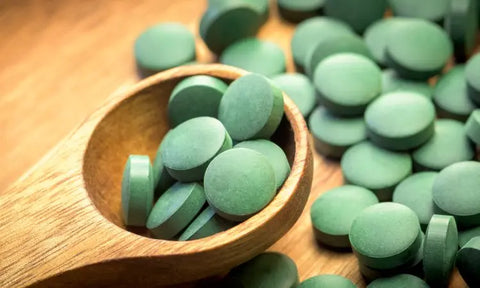
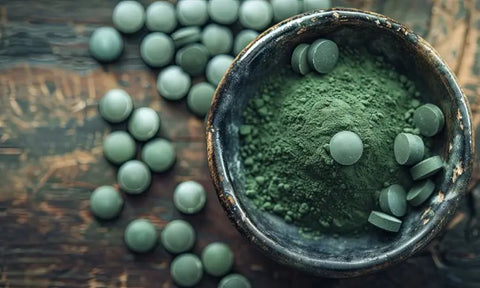
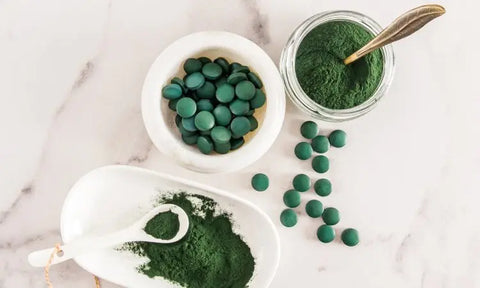
Once harvested, the blue-green alga was dried in the sun and then cut into blocks. This method of preservation gave the Aztecs a vital source of protein all year round. Although they looked different from the organic spirulina tablets we take today, these cakes provided the same nutritional benefits.

The Kanembu origins of spirulina
Spirulina has an even older history in Chad, in the Kanem region. The Kanembu people have made use of its nutritional riches since time immemorial. They harvest the super alga from the surface of the lakes, which are home to a kind of “green slurry” that grows naturally in these mineral-rich waters.
After harvesting, the spirulina is dried and made into cakes known as “dihé” in the Kanembu tradition. These cakes are an important source of nutrients for the community. The microalgae are also used to make nourishing broths that enrich meals. These products are also sold at local markets, allowing local people to benefit from this precious source of nutrition.
If you would like to learn more about spirulina as food, this article will tell you more.
The first notable scientific observations of the super alga
Spirulina was the subject of an important scientific discovery in the 1960s, thanks to the pioneering work of Jean Léonard. During an expedition to Chad, he identified this microalga and gave it the name Spirulina platensis. This discovery marked the beginning of the modern study of this super alga.
In the early 1970s, the IFP (French Petroleum Institute) asked the company SOSA-TEXCOCO for permission to study this blue-green alga. Dr Clément took a particular interest in spirulina's many nutritional benefits, notably its high protein content. This protein research drew the scientific community's attention to the microalga. Studies on spirulina showed that it could become a potential food source and sparked growing interest.
This enthusiasm marked the start of the history of large-scale spirulina production towards the end of the 1970s. It was a major turning point for this superfood, which went from scientific discovery to global nutritional asset.
The science behind the spiral-shaped alga
Spirulina, the super alga with remarkable nutritional properties, takes its name from its fascinating scientific appearance. In Latin, the term “spirulina” refers to a spiral or twist, in keeping with the unique structure of this microalga. It owes its name to the way its cells are twisted into a corkscrew shape. Spirulina is generally between 0.3 and 0.5 mm long, which means it can only be seen under a microscope. Despite its small size, it is extremely rich in essential nutrients.

There are many species of spirulina in aquatic and marine ecosystems around the world. However, only three species of spiral-shaped algae have been studied in depth. These super algae are both edible and endowed with exceptional nutritional qualities. They include:
- Arthrospira maxima
- Arthrospira platensis
- Arthrospira fusiformis
Spirulina's history with leading organisations
Spirulina is widely recognised as a superfood thanks to its exceptional health benefits. In 1974, the UN entered the history of spirulina production by giving its backing to this microalga. The United Nations even described it as “the best food for the future”. This led to the creation of the Intergovernmental Institution for the use of the super alga against malnutrition. Here are 5 main health benefits of spirulina to give you an overview of what it has to offer.
Its various health properties earned spirulina recognition from the WHO in 2005, which described it as a leading means of fighting famine and malnutrition. Even NASA has shown interest in this superfood for its space missions: its exceptional nutritional value makes it an asset for long-duration crewed flights.
Today, spirulina and its benefits are widely acclaimed in the world of food supplements. This blue-green alga is highly beneficial for the body thanks to the many nutrients it contains. But what is spirulina made of? If you are interested in what goes into this superfood, take a look at our article on the subject.
Its use has even been authorised at the Olympic Games. The high protein content of this food supplement helps to support sports performance, and its low cholesterol content is also good news for athletes.
To give athletes extra support, we created our Spirulina Elixir. As well as containing a large quantity of nutrients, this elixir is easily absorbed by the body.

The main environmental challenges of growing the microalga
Spirulina has particular growing requirements, which is why it is not found in just any fresh water. Let's take a closer look at the specific challenges of cultivating this microalga.
Ideal growing conditions for spirulina
The blue-green alga needs a very specific growing environment and water quality, particularly in terms of pH, which must be precisely controlled and is often kept between 9 and 11. This super alga thrives in brackish environments. Growing spirulina also requires optimal temperatures, generally around 35 to 37 °C.
One particular feature of this microalga is that it develops according to the nutrients present in the ponds where it is grown. This makes it possible to enrich the spiral-shaped alga with a specific nutrient to create a spirulina with very specific properties. This is how we produce our iron-enriched spirulina, zinc-enriched spirulina and more.
Where this age-old superfood is grown and where it comes from
The blue-green alga must be grown in a pure environment to keep all its health-giving properties intact. This means the place where spirulina is grown must be free from any pollution that could affect its quality.
That is why, at Algorigin, we grow our spirulina at the foot of the Andes in Ecuador. This region enjoys an unspoilt environment, clean air and water from the snowmelt of the Cayambe volcano. It also has the sunshine and temperatures needed to grow spirulina successfully.
It is this exceptional natural setting that makes our 100% natural spirulina safe and so highly prized. The purity of the environment is reflected in that of our superfoods, giving you products of superior quality. Buy the best food supplements with complete peace of mind in our shop. Whether you choose our Organic Spirulina Granules or our tablets, you can be sure of the quality of the product.

Spirulina, a food supplement steeped in history
As we have seen, spirulina has been through many changes over the centuries, from its use by ancient civilisations to the recent scientific discoveries that have revealed its full potential. Its scientific discovery also led to its inclusion in programmes to combat malnutrition around the world.
Beyond its age-old history, this super alga also owes its nutritional richness to the place where it is grown. To guarantee that richness and purity, we set up our farm at the foot of the Andes. This allows us to produce spirulina that is both rich in nutrients and 100% organic. So choose the spirulina that suits you in our shop and enjoy its exceptional health benefits.